Benefits From Aquarium Fish
by Jack
There are some peculiar varieties of fish which needs particular conditions for their existence. Black molly is a single of them.
Here are in my opinion top 8 aquarium fish species which might be recommended for starters. They will not cause you a lot of trouble in the event you present them with a simple degree of care and love.
He can be kept in water with temperature in between 64 - 73 F (18 - 25 C), your ph need to be neutral (7)
Harlequin Rasbora(Rasbora Hetoromorpha) Size: up to 1 inch (4.5 cm)
Black Molly is actually a brackish fish. Such form of fish can not sustain in either pure freshwater or in pure saltwater. They should be kept in a tank with water which has some salt.
You must make some on-line research and also consult your pet shop owner about just how much salt desires to be placed in the water.
Need to be kept in group ( preferably 10 or more), temperature 24-30 C, range of ph 5,5-7.
White cloud mountain minnow (Tanichthys albonubes) Size: about 3-4cm (1inch)
You do not want a heater to hold this fish, it can survive in water temperature of couple of degrees Celsius above zero. Recommended is 17-22 C ( 62-71 F).
Sumatra Barb (Puntius anchisporus) Size: 1.5 inch ( 6cm)
There are other species which can sustain in such partly salty water.
Besides this particular requirement, Black Molly is like any other average fish. Usually it resembles a black guppy fish. This is a live-bearer fish. So you have to have to provide a good deal of baby fish around the adults. If you hold a pair of a male as nicely as a female with no young ones around, they may well not be comfortable with the atmosphere and could develop anxiety which may well even outcome in their death.
Very active fish, need a substantial space to swim but the tank really should also be nicely planted
You must put the fish in a tank with the water capacity of 10 gallons or more. This is essential for taking care of their living environment. If you wish to keep a family of them inside the tank, which is recommended, you really should calculate the water capacity at two gallons per a single inch of fish. So if the family consists of 10 members, you could maintain them in a tank of 20-plus gallons.
Likes to school, shouldn't be together with fish that have extended fins.
You must install a lighting program to offer enough light for them. They will ordinarily call for 6 hours of light every day. Please don't keep the light for longer time.
This fish is peace-loving. So it's going to be happy to reside with other species comfortably. It won't chase or hurt other fish inside the tank. It does not have any territorial ambition, so it's going to swim about the tank happily with others with out any stress.
If you think the article was helpful you should also be interested in topics about White Spots On Goldfish.
Find out more: ??????? ??? 4 3D (2010) and Mercedes C350 review. copyright goarticles.com
Rating: 4.0

Showing posts with label Freshwater fish. Show all posts
Showing posts with label Freshwater fish. Show all posts
Monday, March 5, 2012


Saturday, December 24, 2011
Neon tetra fish breeding
1. TYPE OF FISH TETRA
The types of fish known TETRA quite beautiful. The various types of tetra known in Indonesia as Tetra Green, Blue Tetra, Silver Tetra, Neon Tetra & many others. In this paper presented a kind of neon tetra from the river Amazon U.S., and has been breeding in Indonesia. Neon Tetra (Hyphessobryconnesi), ornamental fish are included in the group's most interesting ornamental fish. His body was red brindle and blue evergreen body of the gills to its tail. Ornamental fish are easy to maintain, strong and not easy to get sick / die.
 Image source
2. HOW to breeding.
How to breed this tetra fish species is still quite difficult and requires persistence and long experience. As for culturing the fish are in need of certain conditions among:
1. Water should be sterile and acidic (pH less than 6.4)
2. Excited at a dark place.
3. Ambient temperature of 20 ° C
How to distinguish males and females are as follows:
1. Separate moms neon tetra.
2. Rainwater is stored and aged up to + 2 weeks.
3. Places that used to spawn, the fish was first cleaned and washed with alum.
4. Enter the rain water into the spawning places.
5. Give the acid timber with water immersion.
6. Silenced 2 ~ 3 days.
7. Enter the plants or leaves to lay eggs the neon tetra.
8. Enter tetra parent who has been separated beforehand.
9. Cover the hole and give the place a little light in order to be able to see the movements of the fish.
10. If you see a male and female romp with each other, then the + 3 days later the eggs are seen attached to the leaves or roots that have been provided.
11.Move the parent and covered with black cloth so that no incoming light.
12. During the day + 3 neon tetra eggs are hatched.
13. Children can fish fed infusoria the bacterial decay on leaves of cabbage / cabbage was decomposed drop by drop.
14. After 2-3 weeks of the closing was to be opened again.
15. Then the children will look tetra fish.
In hot areas should this be done Tetra breed bathroom that weather was damp and cold.
Reference [Prabowo priambodo] Rating: 4.0
The types of fish known TETRA quite beautiful. The various types of tetra known in Indonesia as Tetra Green, Blue Tetra, Silver Tetra, Neon Tetra & many others. In this paper presented a kind of neon tetra from the river Amazon U.S., and has been breeding in Indonesia. Neon Tetra (Hyphessobryconnesi), ornamental fish are included in the group's most interesting ornamental fish. His body was red brindle and blue evergreen body of the gills to its tail. Ornamental fish are easy to maintain, strong and not easy to get sick / die.
2. HOW to breeding.
How to breed this tetra fish species is still quite difficult and requires persistence and long experience. As for culturing the fish are in need of certain conditions among:
1. Water should be sterile and acidic (pH less than 6.4)
2. Excited at a dark place.
3. Ambient temperature of 20 ° C
How to distinguish males and females are as follows:
- Males Females
- Way of breeding:
1. Separate moms neon tetra.
2. Rainwater is stored and aged up to + 2 weeks.
3. Places that used to spawn, the fish was first cleaned and washed with alum.
4. Enter the rain water into the spawning places.
5. Give the acid timber with water immersion.
6. Silenced 2 ~ 3 days.
7. Enter the plants or leaves to lay eggs the neon tetra.
8. Enter tetra parent who has been separated beforehand.
9. Cover the hole and give the place a little light in order to be able to see the movements of the fish.
10. If you see a male and female romp with each other, then the + 3 days later the eggs are seen attached to the leaves or roots that have been provided.
11.Move the parent and covered with black cloth so that no incoming light.
12. During the day + 3 neon tetra eggs are hatched.
13. Children can fish fed infusoria the bacterial decay on leaves of cabbage / cabbage was decomposed drop by drop.
14. After 2-3 weeks of the closing was to be opened again.
15. Then the children will look tetra fish.
In hot areas should this be done Tetra breed bathroom that weather was damp and cold.
Reference [Prabowo priambodo] Rating: 4.0
Posted by: Treat Fish
Treat Fish, Updated at: 8:38 PM
Monday, November 21, 2011
Cultivation Manvis fish
Origin, Morphology and Habits of Manvis Fish
I don't know about writing the correct name Manvis or Manfish and also known as 'Angel Fish' comes from the waters of the Amazon, South America. Manvis (Pterophyllum scalare) belonging to the family Cichlidae, has the morphological characteristics and habits as follows:
- Having a variety of colors and types of
- Flattened body shape, with a body like an arrow
- Belly fins and fin width stretches back toward the tail, so it appears as a dark-colored arc transparent
- In the chest there are two long fins that dangle down to the tail.
- Maintain and protect offspring.
- Characteristically omnivorus
- Classified as easily accept a variety of foods in various forms and sources

Some types of Manvis fish known and has been growing in Indonesia include: Diamond (Diamond), Imperial, and Black-White Marble.
Diamond (Diamond) shiny silver-gray to green. At the head of the top there is a yellow to brown-black color that ran up the back. Manfish Imperial has a silver base color, but his body decorated with four vertical black / dark brown. Manfish Marble has a mixture of black and white colors that make up the vertical line. While the Black-White manfish have black adorn the back half of his body, and white colors adorn the front half including the head.
Parent management Manvis fish
Manvis Fish can be used as the parent after reaching age 7 months with a length of ± 7.5 cm. To achieve optimal results, the parent should be well managed among others by such good feeding mosquito larvae, Tubifex worms, or Chironomous. Moreover, because the parent fish manfish very sensitive to the disease, then drug treatment should be given periodically Drugs commonly used include Oxytetracycline and salt.
Before breeding, parent manvis maintained mass (male and female) in advance in a large aquarium (100x60x60 cm 3 size). Once cooked eggs, the parent manfish will pair up and separate from other fish. Parent that these pairs can already be taken and breeding on spawning places.
Moreover, it can be done, namely by the parent pair manfish directly after learning of male and female parent. Male parent is characterized by a larger body size compared to the female parent. The head looks rather large male parent with the section between the mouth to the convex-shaped dorsal fin and body shape slimmer than the female fish. While the female parent is characterized by smaller body size and shape of his head is smaller with a larger belly / fat and looks somewhat prominent.
Breeding technique Manvis fish
Breeding conducted in an aquarium measuring 60x50x40 cm 3 with water height ± 30 cm. Into the aquarium of aeration to supply oxygen.
Manvis Fish will attach their eggs on the smooth substrates, such as pieces of PVC pipe that has been prepared / are placed in the aquarium spawning. Since the fish tend to like the atmosphere manfish a dark and quiet, the aquarium can be affixed to the wall paper or dark plastic.
Manfish parent will spawn at night. Female parent put her eggs on the substrate and followed by male fish which squirts his sperm in all egg, so that the eggs are fertilized. The number of eggs produced per parent ranged between 500-1000 eggs. During the spawning period, the parent still be fed Tubifex worms, Chironomous or Daphnia.
Hatching Eggs and Larvae Maintenance Manvis fish
Eggs are attached to the substrate was then moved to the aquarium penmetasan eggs (measuring 60x50x40 cm 3) for hatching. At hatching medium water should be added an antifungal drug, among others methyline Blue with a dose of 1 ppm. To maintain a stable temperature, then into the egg hatching medium used water heater (water heater) is installed at a temperature 27-28oC.
Manfish eggs will hatch after 2-3 days, with the degree of hatching eggs ranged 70-90%. Furthermore paralon place attachment removed eggs and larvae taken care of up to ± 2 weeks old.
Feed given during maintenance of the larval form of natural food in accordance with the larval mouth opening and has a high protein content, among others, nauplii of Artemia sp. The feed is given 2 times a day (morning and afternoon) to ± 10-day-old larvae and followed by dosing with Tubifex worms.
Nursery and Enlargement Manvis fish
After the age ± 2 weeks, the seed can be thinned to nursery until the fish is then performed at a month old.
The next step is to harvest the seed is to be moved into the tub / container enlargement. In this case can be used like a fiber or cement tanks, depending on the available container. During the period of enlargement, aligned to be no flow of water into the container, although slightly enlarged. For rearing fish density is about 100 ekor/m2 manfish. Given feed or pellets of Tubifex worms up to ± 2-month-old seedlings. The size ranges are achieved usually 3-5 cm. If feed and water quality support, survival rate during enlargement can reach 70-90%. Furthermore, seeds can manfish raised again until it reaches the size of the prospective parent or parent with a smaller density.
Diseases and Abatement Manvis fish
Manfish fish known to be quite sensitive to the disease, it is necessary for the good management by maintaining water quality and quantity of feed given. Several types of parasites that attack the seed / stem Manfish include: Trichodina sp., Chillodonella sp. and Epystilys sp. While the bacteria that infect the Aeromonas hydrophilla.
Several types of drugs that can be used to combat the disease attacks parasitek include: Formalin 25%, NaCl 500 ppm. As for the bacterial disease can be used Oxytetrachycline 50-10 ppm by immersion 24 hours.
reference : http://bbat-sukabumi.tripod.com/ Rating: 4.0
I don't know about writing the correct name Manvis or Manfish and also known as 'Angel Fish' comes from the waters of the Amazon, South America. Manvis (Pterophyllum scalare) belonging to the family Cichlidae, has the morphological characteristics and habits as follows:
- Having a variety of colors and types of
- Flattened body shape, with a body like an arrow
- Belly fins and fin width stretches back toward the tail, so it appears as a dark-colored arc transparent
- In the chest there are two long fins that dangle down to the tail.
- Maintain and protect offspring.
- Characteristically omnivorus
- Classified as easily accept a variety of foods in various forms and sources

Some types of Manvis fish known and has been growing in Indonesia include: Diamond (Diamond), Imperial, and Black-White Marble.
Diamond (Diamond) shiny silver-gray to green. At the head of the top there is a yellow to brown-black color that ran up the back. Manfish Imperial has a silver base color, but his body decorated with four vertical black / dark brown. Manfish Marble has a mixture of black and white colors that make up the vertical line. While the Black-White manfish have black adorn the back half of his body, and white colors adorn the front half including the head.
Parent management Manvis fish
Manvis Fish can be used as the parent after reaching age 7 months with a length of ± 7.5 cm. To achieve optimal results, the parent should be well managed among others by such good feeding mosquito larvae, Tubifex worms, or Chironomous. Moreover, because the parent fish manfish very sensitive to the disease, then drug treatment should be given periodically Drugs commonly used include Oxytetracycline and salt.
Before breeding, parent manvis maintained mass (male and female) in advance in a large aquarium (100x60x60 cm 3 size). Once cooked eggs, the parent manfish will pair up and separate from other fish. Parent that these pairs can already be taken and breeding on spawning places.
Moreover, it can be done, namely by the parent pair manfish directly after learning of male and female parent. Male parent is characterized by a larger body size compared to the female parent. The head looks rather large male parent with the section between the mouth to the convex-shaped dorsal fin and body shape slimmer than the female fish. While the female parent is characterized by smaller body size and shape of his head is smaller with a larger belly / fat and looks somewhat prominent.
Breeding technique Manvis fish
Breeding conducted in an aquarium measuring 60x50x40 cm 3 with water height ± 30 cm. Into the aquarium of aeration to supply oxygen.
Manvis Fish will attach their eggs on the smooth substrates, such as pieces of PVC pipe that has been prepared / are placed in the aquarium spawning. Since the fish tend to like the atmosphere manfish a dark and quiet, the aquarium can be affixed to the wall paper or dark plastic.
Manfish parent will spawn at night. Female parent put her eggs on the substrate and followed by male fish which squirts his sperm in all egg, so that the eggs are fertilized. The number of eggs produced per parent ranged between 500-1000 eggs. During the spawning period, the parent still be fed Tubifex worms, Chironomous or Daphnia.
Hatching Eggs and Larvae Maintenance Manvis fish
Eggs are attached to the substrate was then moved to the aquarium penmetasan eggs (measuring 60x50x40 cm 3) for hatching. At hatching medium water should be added an antifungal drug, among others methyline Blue with a dose of 1 ppm. To maintain a stable temperature, then into the egg hatching medium used water heater (water heater) is installed at a temperature 27-28oC.
Manfish eggs will hatch after 2-3 days, with the degree of hatching eggs ranged 70-90%. Furthermore paralon place attachment removed eggs and larvae taken care of up to ± 2 weeks old.
Feed given during maintenance of the larval form of natural food in accordance with the larval mouth opening and has a high protein content, among others, nauplii of Artemia sp. The feed is given 2 times a day (morning and afternoon) to ± 10-day-old larvae and followed by dosing with Tubifex worms.
Nursery and Enlargement Manvis fish
After the age ± 2 weeks, the seed can be thinned to nursery until the fish is then performed at a month old.
The next step is to harvest the seed is to be moved into the tub / container enlargement. In this case can be used like a fiber or cement tanks, depending on the available container. During the period of enlargement, aligned to be no flow of water into the container, although slightly enlarged. For rearing fish density is about 100 ekor/m2 manfish. Given feed or pellets of Tubifex worms up to ± 2-month-old seedlings. The size ranges are achieved usually 3-5 cm. If feed and water quality support, survival rate during enlargement can reach 70-90%. Furthermore, seeds can manfish raised again until it reaches the size of the prospective parent or parent with a smaller density.
Diseases and Abatement Manvis fish
Manfish fish known to be quite sensitive to the disease, it is necessary for the good management by maintaining water quality and quantity of feed given. Several types of parasites that attack the seed / stem Manfish include: Trichodina sp., Chillodonella sp. and Epystilys sp. While the bacteria that infect the Aeromonas hydrophilla.
Several types of drugs that can be used to combat the disease attacks parasitek include: Formalin 25%, NaCl 500 ppm. As for the bacterial disease can be used Oxytetrachycline 50-10 ppm by immersion 24 hours.
reference : http://bbat-sukabumi.tripod.com/ Rating: 4.0
Posted by: Treat Fish
Treat Fish, Updated at: 3:21 PM
Saturday, November 19, 2011
Seeding of Corydoras fish
Corydoras is one type of freshwater fish are much in demand and ornamental fish lovers have export opportunities. Besides being used as a freshwater fish, can also be utilized as raw material for the manufacture of cosmetics in developed countries.

Although these fish originated from South America, but has long been successfully cultivated in Indonesia. This fish is known for easy cultivation.
Morphological characteristics
Short and stout body shape, more arched back than the abdomen, both sides fish are equipped with such as bone plates arranged in two rows, having two pairs of whiskers located in the upper jaw and lower jaw and body size can reach 12 cm.
Corydoras fish can be cultivated in ponds that contain low oxygen in the water. Suitable environmental conditions for these fish species are: pH 6-8, temperature of 21.5-28 o C.

Infrastructure and Facilities for CORYDORAS fish
In the fish Corydoras necessary maintenance tools and equipment in the form of materials, namely:
a. Parent fish Corydoras female and male
b. Container maintenance include:
~ Bak maintenance of male and female parent mass, as well as a place of spawning, or the aquarium measuring 60x40x40 cm.
~ Bak larval rearing and seed mass
c. feed CORYDORAS fish
~ Feed the parent form or Chironomous tubifex worms and mosquito larvae.
~ Feeding larvae of artemia nauplii
~ Food for the enlargement of the fish Corydoras until ready for the market is tubifex worms
Maintenance of female CORYDORAS fish
Fish can be bred Corydoras start at least at the age of eight months. Food that is best given in the maintenance period the parent is feed a lot of chitin-containing substances such as mosquito larvae are good for egg development. Also because of Corydoras are 'bottom feeders' then the fish is more responsive to the kinds of foods such as tubifex worms or Chironomus.
The easiest way to distinguish the sexes is to look at body shape. Male fish has a body shape like a torpedo, a part of the back of the gills to tail tapering. The body is more slender and smaller than females, and male fish dorsal fins look more pointy. Body of female fish are larger in size compared to male fish, and the stomach contains an egg that looks rounded.
Spawning CORYDORAS fish
Spawning conducted en masse in cement tanks, fiber tub or aquarium with a ratio of the parent female: male l: 2 or 1:1. Replacement of water every day, to maintain water quality spawning media.
Corydoras have a type of laying by attaching egg to a substrate, namely: plate glass, pieces of plastic gutter (PVC), ceramic tiles or stone slabs.
Corydoras Fish partially take out the eggs, so that every day can be found substrate plastered egg. Each parent is able to produce 200-350 eggs. Furthermore, the substrate is mounted on the container was taken for hatching eggs hatched.
Hatching eggs CORYDORAS fish
Eggs are attached to the substrate subsequently incubated in the aquarium. The eggs will hatch in six days. During the hatching eggs, maintenance media was given anti-fungal drugs such as methylene blue 0.1 ppm. The degree of hatching eggs ranged 60-70%. Corydoras fish larvae maintained in the aquarium until the age of seven days with a nauplius feeding artemia.
Maintenance phase CORYDORAS fish
Maintenance performed on the container in the form of fiber glass or cement tanks up to a size S (Small = small) with density 20-30 tails / liter. During one month reached a size M (Medium = medium) by density 10-15/liter and ready to be marketed.
Subsequent maintenance is more directed to the procurement of prospective parent, because usually in sizes L (Large) market demand tends to decline. Density in the maintenance of size M to L size is 5 fish / liter.
Feed given during maintenance of the fish until ready to be marketed in the form of tubifex worms.
Fish Health Management CORYDORAS fish
Several types of parasites known to infect fish Corydoras are: Trichodina sp, Epistylis, Glossatella sp and Chillodonella sp. While the bacteria that attack is usually a secondary infection that occurs due to injuries due to handling, or attack the parasite that causes injury. Types of bacteria found were Aeromonas hydrophilla.
Treatment for parasitic disease is the use of formalin 25 ppm, 500 ppm of salt. As for bacterial diseases using Oxytetracycline 10 ppm by immersion.
reference : http://bbat-sukabumi.tripod.com Rating: 4.0

imgae source : photobuket.com
Morphological characteristics
Short and stout body shape, more arched back than the abdomen, both sides fish are equipped with such as bone plates arranged in two rows, having two pairs of whiskers located in the upper jaw and lower jaw and body size can reach 12 cm.
Corydoras fish can be cultivated in ponds that contain low oxygen in the water. Suitable environmental conditions for these fish species are: pH 6-8, temperature of 21.5-28 o C.

imgae source : photobuket.com
In the fish Corydoras necessary maintenance tools and equipment in the form of materials, namely:
a. Parent fish Corydoras female and male
b. Container maintenance include:
~ Bak maintenance of male and female parent mass, as well as a place of spawning, or the aquarium measuring 60x40x40 cm.
~ Bak larval rearing and seed mass
c. feed CORYDORAS fish
~ Feed the parent form or Chironomous tubifex worms and mosquito larvae.
~ Feeding larvae of artemia nauplii
~ Food for the enlargement of the fish Corydoras until ready for the market is tubifex worms
Maintenance of female CORYDORAS fish
Fish can be bred Corydoras start at least at the age of eight months. Food that is best given in the maintenance period the parent is feed a lot of chitin-containing substances such as mosquito larvae are good for egg development. Also because of Corydoras are 'bottom feeders' then the fish is more responsive to the kinds of foods such as tubifex worms or Chironomus.
The easiest way to distinguish the sexes is to look at body shape. Male fish has a body shape like a torpedo, a part of the back of the gills to tail tapering. The body is more slender and smaller than females, and male fish dorsal fins look more pointy. Body of female fish are larger in size compared to male fish, and the stomach contains an egg that looks rounded.
Spawning CORYDORAS fish
Spawning conducted en masse in cement tanks, fiber tub or aquarium with a ratio of the parent female: male l: 2 or 1:1. Replacement of water every day, to maintain water quality spawning media.
Corydoras have a type of laying by attaching egg to a substrate, namely: plate glass, pieces of plastic gutter (PVC), ceramic tiles or stone slabs.
Corydoras Fish partially take out the eggs, so that every day can be found substrate plastered egg. Each parent is able to produce 200-350 eggs. Furthermore, the substrate is mounted on the container was taken for hatching eggs hatched.
Hatching eggs CORYDORAS fish
Eggs are attached to the substrate subsequently incubated in the aquarium. The eggs will hatch in six days. During the hatching eggs, maintenance media was given anti-fungal drugs such as methylene blue 0.1 ppm. The degree of hatching eggs ranged 60-70%. Corydoras fish larvae maintained in the aquarium until the age of seven days with a nauplius feeding artemia.
Maintenance phase CORYDORAS fish
Maintenance performed on the container in the form of fiber glass or cement tanks up to a size S (Small = small) with density 20-30 tails / liter. During one month reached a size M (Medium = medium) by density 10-15/liter and ready to be marketed.
Subsequent maintenance is more directed to the procurement of prospective parent, because usually in sizes L (Large) market demand tends to decline. Density in the maintenance of size M to L size is 5 fish / liter.
Feed given during maintenance of the fish until ready to be marketed in the form of tubifex worms.
Fish Health Management CORYDORAS fish
Several types of parasites known to infect fish Corydoras are: Trichodina sp, Epistylis, Glossatella sp and Chillodonella sp. While the bacteria that attack is usually a secondary infection that occurs due to injuries due to handling, or attack the parasite that causes injury. Types of bacteria found were Aeromonas hydrophilla.
Treatment for parasitic disease is the use of formalin 25 ppm, 500 ppm of salt. As for bacterial diseases using Oxytetracycline 10 ppm by immersion.
reference : http://bbat-sukabumi.tripod.com Rating: 4.0
Posted by: Treat Fish
Treat Fish, Updated at: 3:50 AM
Monday, September 19, 2011
Several factors that fish stress causes

Everything beyond the necessary requirements or behavior of your fish will cause your fish stress, stress to your fish usually will affect fish health, reduce the life span and increase the likelihood of your fish have the disease.
Fish have a slime coat that their primary defense system against infection and stress is a major cause of deterioration of the mucus coat. Fish can adapt to different conditions a bit there and understand the environmental factors that contribute to stress will reduce the risk.
By maintaining a balanced environment that includes things like kamiparameter aquarium water as this will elimate stress.
So what causes stress for the fish?
Aquarium Mates:
The key word here is compatibility, so the last thing you want is to aggressively pursue the fish shy about fish, smaller fish with no hiding places will feel the stress when theres a big fish around
Some fish require a herd to feel secure where others may be happy in there own, so know your fish and you can ableto provide a better environment for them.
Aquarium Size:
Most fans of the new shoots will go out and buy fish a lot because they can suppress and at the time would be more popular saltwater aquariums them, about the rule of thumb is 1inch of fish per 2 gallons of water but remember the fish we will grow as well. Again notice the needs of individual fish before buying fish from the sea to avoid more trouble.
Aquarium Water Temperature:
Fluctuations in temperature should be moderate and controlled at all times. The optimum temperature for fish will vary from fish to fish, but it's too cold or hot will cause stress in fish. Keep in mind that the tank in direct sunlight will heat up during the day. The water temperature also may rise during the light period. It can be more concern with the tank is smaller than larger ones.
Aquarium Water changes can cause stress so it is important that you have the same temperature of water, and do not disturb the fish too much, too, because it is always better to change the water more or less frequently.
Water Parameters:
Poor water quality or toxic posioning is the most significant cause for stress. Most fish can survive in conditions of sub-optimal if it is not too far from their reach. But the sudden change in water chemistry will cause severe stress. Adjustment of aquarium pH, salinity, or water hardness should be done gradually. Ammonia and nitrite are very stressful and can be detrimental if high levels persist.
Nitrate, is not as dangerous as ammonia / nitrite contributes to stress at all levels.
Other factors:
Stress is also caused by a deficiency of oxygen levels (fish gasping), old fish food, and a balanced diet.
Fish is not good travelers and can cause a lot of stress so good care must be taken during the acclimatization process.
Symptoms of Stress:
hiding fish
fish do not eat or eat less than usual
fish floating on the surface or moving on the ground
wound healing is not
sick fish
Many factors must be considered but elimainating as much as possible will increase the resistance of your fish. Sources : Mencegah stres ikan Rating: 4.0
Posted by: Treat Fish
Treat Fish, Updated at: 11:51 PM
Friday, May 6, 2011
Species of Golden fish
A variety of charming golden fish for our vision, and not ending they dazzle and delight our eyes.
There are several varieties of golden fish unique unique and funny, golden fish is freshwater fish ...
Just Sharing info ...
1.Bubble Eye / Suihogan Goldfish:
 Unique species of goldfish that comes from China these have eyes pointing upwards and 2 large bags filled with fluid, these fish have no fin on his back, goldfish can grow 6 -8 inches.
2.Ranchu Goldfish:

 Goldfish with an unusual appearance is referred to as the "king of gold fish" by the Japanese. Ranchu is the result of cross breeding experiments that differ from Lionhead China. These fish have no fin on, and have many colors such as orange, red, white, red-and-white, blue, black, black-and-white, black-and-red, pale fish with yellow bodies and red heads are very rare and rare.
3.Butterfly tail / Jikin Goldfish:
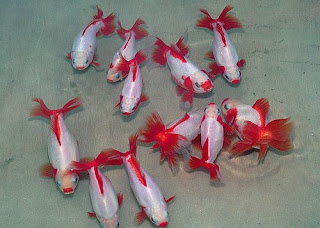 Beautiful and adorable but rare, jikin believed from Japan. The most prominent characteristic is
tail which has the form X. long tail has a distinctive bow tie, or torpedo-shaped cigar.
White body with the lips, red fins and gills. can grow to 9 inches.
Another name is the tail of the Peacock and Rokuri.
4.Telescope Eye / Demekin Goldfish:


This species has large eyes and unique, this variation is red, red and white, calico, black and white, brown, blue, lavender, chocolate-and-blue and black color.
They may also sometimes have a metallic scales. Although his eyes big, bad eyesight and better not mixed a aquarium with other types of agile and placed in akurium without pointy objects.
5.Oranda Goldfish:


Ornamental, unique goldfish from China and Japan, characterized by a hood like raspberries dikepalanya.
Goldfish are very famous all over the world, and have a great body with 4 long tails
6.Celestial Eye / Choten gan Goldfish:

One of the odd goldfish from China and Korea.Mata goldfish is like a telescope eye goldfish, but pointing upwards The body is shaped like a torpedo fish, and no fins on.
7.Lionchu/Lionhead Goldfish:

Unique goldfish is a goldfish that has no fins on the Thai and the result of cross breeding between lionheads and ranchus. Has a great body, wide and curved to the rear and a large head.
8.Ryukin Golfish:
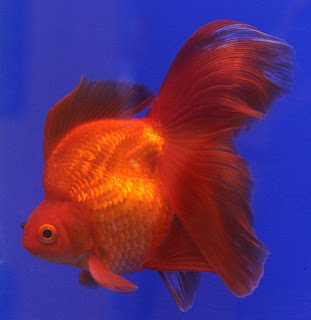
Brightly colored goldfish and withdraw from Japan is a fin that amount 2 times the body length, snout is pointed and his back bent Ryukin have colors like maroon, red and white, white, metallic and calico color. A good aquarium maintenance in these fish can reach up to 8 inches or 21 cm.
Another nickname is Ribbontail Japan, Fringetail, Fantail or Veiltail
9.Calico/Nacreous Goldfish:


Goldfish named Calico or Nacreous has a mix of metallic and transparent color scales that give the impression of pearls.
Calico can grow to 12 inchi.Coraknya consist of patches of red, yellow, gray and black with dark spots and blue.
10.PomPom/Hanafusa Goldfish:

Hanafusa have flesh that grows like a pom pom around his nose, his body like Lionhead, but that grows is her nose, and sometimes even have flesh that grows up through the lower jaw
11.Chinsurin / Pearlscale Goldfish:
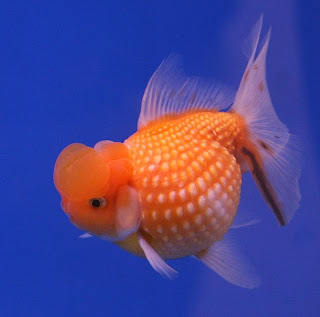
Goldfish this one punysa scales speckled spots and colored pearls,
originated from Japan and called Chinsurin
Unique Facts about Golden Fish :
* Digestive goldfish is very simple, and very hard to digest protein
* Chef goldfish can change the color of the body, according to the place where they are stored or maintained
* Goldfish chef produces pigment when exposed to light. If the fish Mas placed in the dark, he would seemingly be brighter in the morning, and when repeatedly placed in a dark place, then the goldfish will lose its color.
* Chef goldfish can grow up to maximum length of 58.42cm and weighs 4.5 kg
* Goldfish chef longest ever measured 47.7 cm long, from snout to tail, in the Netherlands
* Chef goldfish can live to 20 years, but pet goldfish only live 6 to 8 years (healthy lifestyle ga ya?)
* Chef's oldest goldfish ever recorded 49-year-old
* Chef can live goldfish in the pond surface freezes, long as there is enough oxygen and water is not fully hardened
* In Italy there are laws that prohibit the use of goldfish as prizes carnival
* In Rome prohibited from maintaining a goldfish in a jar, because according to them very cruelly confining fish in a place like that.
Source : Budidaya news Rating: 4.0
There are several varieties of golden fish unique unique and funny, golden fish is freshwater fish ...
Just Sharing info ...
1.Bubble Eye / Suihogan Goldfish:

2.Ranchu Goldfish:


3.Butterfly tail / Jikin Goldfish:

tail which has the form X. long tail has a distinctive bow tie, or torpedo-shaped cigar.
White body with the lips, red fins and gills. can grow to 9 inches.
Another name is the tail of the Peacock and Rokuri.
4.Telescope Eye / Demekin Goldfish:


This species has large eyes and unique, this variation is red, red and white, calico, black and white, brown, blue, lavender, chocolate-and-blue and black color.
They may also sometimes have a metallic scales. Although his eyes big, bad eyesight and better not mixed a aquarium with other types of agile and placed in akurium without pointy objects.
5.Oranda Goldfish:


Ornamental, unique goldfish from China and Japan, characterized by a hood like raspberries dikepalanya.
Goldfish are very famous all over the world, and have a great body with 4 long tails
6.Celestial Eye / Choten gan Goldfish:

One of the odd goldfish from China and Korea.Mata goldfish is like a telescope eye goldfish, but pointing upwards The body is shaped like a torpedo fish, and no fins on.
7.Lionchu/Lionhead Goldfish:

Unique goldfish is a goldfish that has no fins on the Thai and the result of cross breeding between lionheads and ranchus. Has a great body, wide and curved to the rear and a large head.
8.Ryukin Golfish:

Brightly colored goldfish and withdraw from Japan is a fin that amount 2 times the body length, snout is pointed and his back bent Ryukin have colors like maroon, red and white, white, metallic and calico color. A good aquarium maintenance in these fish can reach up to 8 inches or 21 cm.
Another nickname is Ribbontail Japan, Fringetail, Fantail or Veiltail
9.Calico/Nacreous Goldfish:


Goldfish named Calico or Nacreous has a mix of metallic and transparent color scales that give the impression of pearls.
Calico can grow to 12 inchi.Coraknya consist of patches of red, yellow, gray and black with dark spots and blue.
10.PomPom/Hanafusa Goldfish:

Hanafusa have flesh that grows like a pom pom around his nose, his body like Lionhead, but that grows is her nose, and sometimes even have flesh that grows up through the lower jaw
11.Chinsurin / Pearlscale Goldfish:

Goldfish this one punysa scales speckled spots and colored pearls,
originated from Japan and called Chinsurin
Unique Facts about Golden Fish :
* Digestive goldfish is very simple, and very hard to digest protein
* Chef goldfish can change the color of the body, according to the place where they are stored or maintained
* Goldfish chef produces pigment when exposed to light. If the fish Mas placed in the dark, he would seemingly be brighter in the morning, and when repeatedly placed in a dark place, then the goldfish will lose its color.
* Chef goldfish can grow up to maximum length of 58.42cm and weighs 4.5 kg
* Goldfish chef longest ever measured 47.7 cm long, from snout to tail, in the Netherlands
* Chef goldfish can live to 20 years, but pet goldfish only live 6 to 8 years (healthy lifestyle ga ya?)
* Chef's oldest goldfish ever recorded 49-year-old
* Chef can live goldfish in the pond surface freezes, long as there is enough oxygen and water is not fully hardened
* In Italy there are laws that prohibit the use of goldfish as prizes carnival
* In Rome prohibited from maintaining a goldfish in a jar, because according to them very cruelly confining fish in a place like that.
Source : Budidaya news Rating: 4.0
Posted by: Treat Fish
Treat Fish, Updated at: 4:59 PM
Tuesday, April 26, 2011
How to Care for Arowana Fish
This fish is one of my favourite freshwater fish, Arowana fish Asian Arowana or (Scleropages formosus), is a species of freshwater fish from Southeast Asia. This fish has a long body, anal fin is located far behind the body. Asian Arowana generally have a silvery color. Asian Arowana are also called "Dragon Fish" because it is often linked with the dragon of Chinese Mythology.
Asian Arowana is a native species of rivers in Southeast Asia, especially Indonesia. There are four varieties of colors contained in the location:
* Green, found in Indonesia, Vietnam, Burma, Thailand, and Malaysia.
* Gold with a red tail, found in Indonesia.
* Gold, found in Malaysia.
* Red, found in Indonesia.
Asian Arowana are listed in the endangered species list with the status of "critically endangered" by IUCN in 2004. The number of species that are declining due to frequent trading because of the high value as aquarium fish, mainly by the Asian community. Followers of Feng Shui can pay a heavy price for these fish.
How to Care for Fish Arowana:
1. Notice aquarium equipment
Success of the aquarium into a comfortable place for arowana fish, really influenced by the completeness of supporting facilities.
Aerator
Function aerator or air pump is supplying air into the aquarium water, and simultaneously vaporize or push the remnants of burning out from the aquarium. Aerator is quite good, if a small electrical current that moves him, but a relatively large .
Heater & Thermometer
Heater is necessary especially when the aquarium water temperature dropped dramatically. While the water temperature control equipment or thermometer was also installed in the aquarium. In cold areas, heater and thermometer is very necessary.
Filter
Filter or filter function to filter the water in the aquarium. Work includes this filter to suck up water aquarium, filter, and back again into the tank in a clean condition.
TL Lamp
The presence of fluorescent lights, in addition to emit light, also can enhance your appearance aquarium. But, do not let light fluorescent lamp was a cause heat in excess of needs. Ideally for an area of 80x40 cm aquarium fluorescent lamps require 20 watts power.
2. Diligent aquarium maintenance
I can not help if you already love Arowana fish in the aquarium, it is enough diligent care. because then that, the appearance of arowana in the aquarium look healthy, fresh, and fun.
Feeding.
The main menu is a centipede arowana in the aquarium. but do not constantly given a centipede, should be varied with other foods. for example: shrimp, cockroaches, frogs, centipedes, lizards, and crickets.
Control & running water.
Every day is required to control water temperature and ph. As for the ideal water temperature for arowana fish around 25-27 degrees Celsius. if the temperature of cold water, immediately turn on the heater until the water temperature as needed. whereas the desired ph of about 6 to 8.5. if the ph is too low, then add the lime into the tank. in addition, water sanitation should be noted also, please treat the aquarium water with malachite green, with a frequency of 3 weeks.
and do not forget, aquarium water was also replaced. but running water is dipilahkan into two, namely: (a) regular water changes every 2 days with a volume of 10% of the total volume of aquarium water, and (b) total water change done every 3 months. if you use pam water, should be allowed 24 hours in advance for the content of chlorine to settle, and after that can be inserted into the aquarium.
3. Aquarium interior.
Life in the aquarium is a replica of the environment in the wild. therefore, necessary in the aquarium interior. This means that demands an appreciation of aesthetics, so the combination of the beauty of the aquarium with elegant Arowana fish can show a harmonious shades of coolness.
Aquatic plants.
Given the origin of arowana fish who like to hide under water plants, then we are ready to provide the plant in question. There are several types of aquatic plants to choose from, among others: vallisneria spiralis, hidrilla VERTICILLATA, riccia fluiutana, higrophila polisperma, pistia stratiotes, najas indica, and so forth.
Sand and rocks.
Sand is used as the foundation stone laying. should use river sand, which is still mixed with humus. in addition, are also included rock and coral-essay. ideal size of stones berdia meter 3 mm. these rocks have a variety of patterns and colors that range but still beautiful.
Source : blaz-langz.blogspot.com Rating: 4.0
Asian Arowana is a native species of rivers in Southeast Asia, especially Indonesia. There are four varieties of colors contained in the location:
* Green, found in Indonesia, Vietnam, Burma, Thailand, and Malaysia.
* Gold with a red tail, found in Indonesia.
* Gold, found in Malaysia.
* Red, found in Indonesia.
Asian Arowana are listed in the endangered species list with the status of "critically endangered" by IUCN in 2004. The number of species that are declining due to frequent trading because of the high value as aquarium fish, mainly by the Asian community. Followers of Feng Shui can pay a heavy price for these fish.
 |
| image source : photobucket.com |
How to Care for Fish Arowana:
1. Notice aquarium equipment
Success of the aquarium into a comfortable place for arowana fish, really influenced by the completeness of supporting facilities.
Aerator
Function aerator or air pump is supplying air into the aquarium water, and simultaneously vaporize or push the remnants of burning out from the aquarium. Aerator is quite good, if a small electrical current that moves him, but a relatively large .
Heater & Thermometer
Heater is necessary especially when the aquarium water temperature dropped dramatically. While the water temperature control equipment or thermometer was also installed in the aquarium. In cold areas, heater and thermometer is very necessary.
Filter
Filter or filter function to filter the water in the aquarium. Work includes this filter to suck up water aquarium, filter, and back again into the tank in a clean condition.
TL Lamp
The presence of fluorescent lights, in addition to emit light, also can enhance your appearance aquarium. But, do not let light fluorescent lamp was a cause heat in excess of needs. Ideally for an area of 80x40 cm aquarium fluorescent lamps require 20 watts power.
2. Diligent aquarium maintenance
I can not help if you already love Arowana fish in the aquarium, it is enough diligent care. because then that, the appearance of arowana in the aquarium look healthy, fresh, and fun.
Feeding.
The main menu is a centipede arowana in the aquarium. but do not constantly given a centipede, should be varied with other foods. for example: shrimp, cockroaches, frogs, centipedes, lizards, and crickets.
Control & running water.
Every day is required to control water temperature and ph. As for the ideal water temperature for arowana fish around 25-27 degrees Celsius. if the temperature of cold water, immediately turn on the heater until the water temperature as needed. whereas the desired ph of about 6 to 8.5. if the ph is too low, then add the lime into the tank. in addition, water sanitation should be noted also, please treat the aquarium water with malachite green, with a frequency of 3 weeks.
and do not forget, aquarium water was also replaced. but running water is dipilahkan into two, namely: (a) regular water changes every 2 days with a volume of 10% of the total volume of aquarium water, and (b) total water change done every 3 months. if you use pam water, should be allowed 24 hours in advance for the content of chlorine to settle, and after that can be inserted into the aquarium.
3. Aquarium interior.
Life in the aquarium is a replica of the environment in the wild. therefore, necessary in the aquarium interior. This means that demands an appreciation of aesthetics, so the combination of the beauty of the aquarium with elegant Arowana fish can show a harmonious shades of coolness.
Aquatic plants.
Given the origin of arowana fish who like to hide under water plants, then we are ready to provide the plant in question. There are several types of aquatic plants to choose from, among others: vallisneria spiralis, hidrilla VERTICILLATA, riccia fluiutana, higrophila polisperma, pistia stratiotes, najas indica, and so forth.
Sand and rocks.
Sand is used as the foundation stone laying. should use river sand, which is still mixed with humus. in addition, are also included rock and coral-essay. ideal size of stones berdia meter 3 mm. these rocks have a variety of patterns and colors that range but still beautiful.
Source : blaz-langz.blogspot.com Rating: 4.0
Posted by: Treat Fish
Treat Fish, Updated at: 6:22 AM
Wednesday, March 9, 2011
Cultivation Oscar Fish
 |
| image source : photobucket.com |
Oscar fish have interesting shapes and colors. Blackish body color with reddish yellow batik motif. This fish requires special treatment in pengembangbiakannya way, so it is difficult to be cultivated.
BREEDING
Selection of Parent
1) Parent that is suitable for the breeding should have 1.5 to 2 years old, with body length reaching 15 cm and 10cm high, and brightly colored.
2) Parent selection can be started at the age of juvenile fish (5-6 months) by mixing 5 males and 5 females. This oscar fish will find their own partners. After each pair, then separate in the tub itself to be a parent.
Differences in male and female
| Male Parent | Female Parent |
| - Body relatively longer | - Parent who has done his stomach looks bloated |
| - Genital more prominent | - Larger hole sex |
SPAWNING / BREEDING METHOD
1. Like a marriage can be made of cement a 1.5 x 1 x 0.5 m3, then filled with water that has been deposited for 12-24 hours with a height of 30-40 cm. If the marriage tub area, sealing can be done.
2. A pair of oscar parent who has entered a mature egg for spawning each tub.
3. At each given a flat stone bathtub, preferably dark, and the top of the vessel is closed to the atmosphere seemed dim.
4. These fish usually spawn in the afternoon and evening immediately fertilized by the males.
5. Eggs that are above the flat rock after fertilization, can be lifted to be moved into the aquarium for hatching. Aquariums are used should be sized 70 x 40 x 40 cm3 and a height of 10 cm filled with water to eggs that come from the parent pair.
6. The aquarium is supplied air bubbles (aeration) with the weak force.
7. After three days usually begin to hatch eggs. Water should be given a mixture of liquid methylene blue to prevent fungus covered eggs.
MAINTENANCE OF SEED
These fish until the age of four days should not be fed, because they still consume the egg yolks. Feeding during this period will only pollute the water and can cause disease.
On day five, the seeds can be fed rotifers or tiny shrimp. Feeding should be quite frequent as the cannibalistic nature of these fish (prey on each other).
On day ten seed was given to water fleas that have been filtered.
When she was 2 weeks, the seeds begin without filtered water was given lice da hair started to try to speed up the worm given magnification.
Seeds can be moved to a larger tub after the age of 25 days.
ENLARGEMENT
Enlargement can be done after the seed was 25 days.
Seeds that can be generated from one-time hatching approximately 1000-3000 birds.
Bak used should be a 2 x 1 x 1 m3 and filled with water as high as 20-25 cm.
For the first time enlargement, seed can be spread around 300 fish.
To reduce the heat of the sun during the day, in a bath of water given plants like water hyacinth and hidrilla verticillata. To prevent the entry of too much rain, the pool can be closed zinc with plastic.
Food can be given the hair worm.
After the fish aged 5-6 months, then be selected as a parent. Food provided was replaced with shrimp or shrimp rebon time surviving.
Parent pair can produce 1000 to 4000 eggs once spawning.
CLOSING
To produce a beautiful color on oscar fish, feeding should contain calcium (chitine) which starts from childhood, such as water fleas, rotifers, hair worms, Artemia, shrimp or shrimp rebon times.
Good luck. (RAD)
SOURCES / REFERENCES : 1. Fisheries Agency of DKI Jakarta, 1996
2. Brosur Informasi Dinas Perikanan Propinsi DKI Jakarta
3. http://heruamuawinmenembuscakrawala.blogspot.com/2009/07/pendahuluan-ikan-oscar-astronatus.html Rating: 4.0
Posted by: Treat Fish
Treat Fish, Updated at: 10:57 PM
Sunday, March 6, 2011
African butterfly fish life
 |
| image source : photobucket.com |
African Butterfly Fish (Pantodon buchholzi) These fish are small with a body length not exceeding 13 cm and has a fairly wide pectoral fins. is a unique fish found in the Congo river and the river Niger in West Africa. This pectoral fins look like wings of a butterfly when viewed from above. These fish have eyes and mouth are trained to hunt their prey at the water surface
The less attractive they are colored green with a slight brownish-gray color. African butterfly fish are tropical fish that can survive a temperature range of 23 - 300C and pH 6 to 7.5. Fins are transparent in color and sometimes there is a ring of dark and pale, while the pectoral fins blackish with white edges. Black pattern also extends from the top of the head through the eye to the upper jaw.
Because the African butterfly fish food are carnivores (insectivores ) and is a specialist hunter on his favorite surface is insects and small fish. Sometimes he also jumped out of the water to hunt their prey. In addition, the African butterfly fish are also able to breathe by taking air directly on the water surface.
 |
| image source : photobucket.com |
Differences in male and female fish are located on the back edge of the fin anal, the male and the female generally convex shape of straight.
Breeding techniques is not easy but it has to be done in a tank scale. Water conditions for breeding should be slightly acidic with a pH 6 to 6.5 and a temperature of 77 - 780F. Initially males will chase females among the water plants and then the male will clamp the female in the fins.
Egg-laying process will occur within a few days by the number of eggs 100 grains per day. The eggs will float on the surface of the water, because fish is not the kind of parent guards the eggs should be separated into another tank. The eggs will hatch after 3-4 days, the seedlings were raised because the fish is difficult to require a very small live food.
Microworm not be used as a food fish newly hatched chicks, puppies are usually very small shrimp that can be used as an alternative. Fish seedlings are very sensitive to changes in water quality so that these things need to be controlled. reference [ZA fish action] Rating: 4.0
Posted by: Treat Fish
Treat Fish, Updated at: 8:02 PM
Monday, February 28, 2011
Tips for Choosing the Best Fish for a Freshwater Aquarium
Tips for Choosing the Best Fish for a Freshwater Aquarium
By J W Chase
Introduction
When choosing fish for your freshwater aquarium you need to take your time and choose the right type for you and your aquarium. Do your homework because you need to keep your aquarium peaceful. If you choose the wrong ones, you will not have a peaceful aquarium.
If your new to keeping freshwater fish, then you may not know this but you need to select the ones that are compatible with each other and occupy different parts of your aquarium. Plus you need to ensure they do not outgrow your aquarium.
Personalities
For freshwater fish there are three distinct personality types. When selecting fish for your aquarium, you should select fish that have the same personalities or you will have social issues in your tank.
The different personalities are:
- Community- These fish are rather peaceful fish and are not aggressive toward other fish. Their diet is not special and is good for people just starting out with establishing their first aquarium.
- Semi-Aggressive - These fish are more aggressive than community fish and will tend to nip at the fins of smaller fish. My 75-gallon freshwater aquarium is made up of semi-aggressive fish such as Kissing Gourami, Blue Gourami and schooling Tiger Barb. Semi-aggressive fish are compatible with each other.
- Aggressive or Non-Community - These fish should not be mixed with other fish of different species and should either be kept alone or with fish of their own size and species. These fish are very territorial.
If you have questions about the personality of a particular fish, ask your local pet store. Your pet store should have the freshwater fish separated by personality type.
Separation
If you have a large tank like mine, 75-gallons, you will want to select fish that tend to stay at different levels of the aquarium. For example, I have two Plecostomus that spend most of their time at the bottom of the tank eating algae and fish flakes that fall to the bottom.
I also have seven Tiger Barb that school around the middle of the tank. The Gourami I have will spend their time in the middle and will go to the top of the tank periodically to grab a breath of air.
Size
Keep in mind too that you need to factor in fish size for your aquarium. As a rule of thumb consider one inch of adult fish for every gallon of water in your aquarium.
J.W. Chase is an amateur Aquarist who has successfully been keeping aquariums for over 35 years. Over 75% of people who start aquariums fail in the first month for lack of knowledge. If you want more information on how to keep an aquarium, go to his web site and download a free eBook on "15 Tips On Building And Maintaining An Aquarium" at http://www.squidoo.com/homefreshwateraquariums.
Article Source: http://EzineArticles.com/?expert=J_W_Chase
http://EzineArticles.com/?Tips-for-Choosing-the-Best-Fish-for-a-Freshwater-Aquarium&id=6879522
Rating: 4.0
Posted by: Treat Fish
Treat Fish, Updated at: 11:56 PM
Thursday, December 30, 2010
Basic Aquarium Plants Care
 |
| image source : photobucket.com |
They also serve as a place where beneficial bacteria can colonize. This bacterium is important to have and assist in breaking down waste products in the tank. Overall, the use of live plants helps keep your aquarium clean and healthy while adding a perfect visual effect.
 |
| image source : photobucket.com |
 |
| image source : photobucket.com |
Add the fish of your choice and enjoy a beautiful tank After your plants established and growing well. While keeping the plants alive in the tank, it is important to treat them as you would other plants. Always remove decaying leaves as they tend to deplete nutrients from the healthy part of the plant. Dying roots will rot beneath the gravel. Be sure to remove any part of the plant that is dying or appears sick. Many plants are seeded into the gravel will reproduce. New plant growth can be removed and planted in other parts of the aquarium. If you use live plants which mainly stem plant, try to remove the lower leaves. These low leaves tend to not get the amount of light needed to stay healthy.
The use of live plants will definitely help in creating a masterpiece aquarium that is pleasing to the eye and a happy and healthy environment for your fish. Always remember to clean your aquarium on a regular basis and inspect plants weekly for decay. Scheduled maintenance is the key to maintaining beautiful and healthy aquarium. Rating: 4.0
Posted by: Treat Fish
Treat Fish, Updated at: 4:46 PM
Selecting Your Aquarium Freshwater Fish
Selecting Your Aquarium Freshwater Fish
Author: Rozlyn RozberrySo, you've got your fish tank ready and you need a legion of swimming, cheerful fish to fill it, right? Well, slow down and decide exactly what sort of fish you want in your aquarium BEFORE buying!
If you are intending to have a community tank, you will want to select fish from the various tank levels, giving the aquarium a balanced feel. You may desire fish of a particular shape or size. Each person will have their own unique style. One point is sure, you have an aquarium and you require freshwater fish!
The fish type you select will take some thought on your part, particularly if you will be mixing species. Remember to research before buying anything, because you risk fish illness and ultimately death if you don't!
Research Can Be Fun and Easy
Staff at a fish supply store should be able to tell you a lot about what you need to keep your potential fishes happy and healthy in their new home, and you might find that they're more informed then you previously expected.
There is a lot of information needed when selecting your fish, of which some are:
- Does this fish like concealed places or open areas?
- The pH requirements are important for a mixed breed aquarium, the fish you choose need to thrive in the same range.
- Does this fish get along with others?
- Is this fish a meat eater or a vegetarian? - What type of eater is this fish? Top? Bottom? Aggressive?
- How much room will this fish require?
- Is the temperature range for this fish going to be compatible with the other fish you plan to have?
Balancing the environmental needs of your fish when choosing multiple breeds is crucial. The closer you get it, the better your tank is going to be in the long run.
While I could give you the breeds of the fish, you're just going to get confused, and you won't really be able to fall in love with the fish this way. It has been my experience that the best course of action, and the most rewarding is this:
Head to a fish store and browse what they have. If you have a number of fish stores in your area, visit all of them! Your primary purpose is to identify which fish capture your attention, then write down the species in a note pad. Talk to the store staff about any special needs and write that down also.
When you get home, spread your notes out on the kitchen table and begin an inspection of your information. See which species match the closest, cross reference your information with information from the store staff or check online before making the final selections.
This process is sure to give you satisfaction with the end results and provide your fish the best chance at happiness.
Food Variety Is Important!
There's one thing that some people just don't consider when stocking multiple fish species, and this is dietary needs. Not all fish eat at the same level - some are bottom dwellers, and others are surface eaters.
Mixing these are just fine, but try to avoid aggressive top feeders - pellets that go to the bottom fish might not get to them!
Providing a good dietary regimen for your fish is easier if their needs are alike. Remember, hungry fish will become stressed fish, which can lead to injury, illness and in the end death!
When picking your fish, you do need to consider cannibalism! No we're not joking! This is grave, do not underestimate your fish.
At serious risk are fish with flowing fins, they are slow moving and great targets for bothersome or aggressive breeds. Fish will bite each other and smaller fish may require escape routes from larger, more aggressive fish.
To keep a happy tank, try to match social levels. Severe issues are usually avoided as the antagonizes know when to withdraw to avert injury to themselves.
Dealing with Aggression
A lot of fish - particularly males - will be aggressive in general, so you really do need to try and avoid pairing more than one male in the tank, with the exception of less aggressive species.
Even fish with like colors can sometimes set it off, so be mindful who you pair with whom. It really depends on the breed of fish, but a ratio of 2-3 females for each male should keep you out of harm's way.
The Ultimate Offense
Your fish rely on you to keep them safe, after all, they can't just pack their bags and set off to the neighbor's house! Choosing your fish based on looks and not temperament is cruel, not to mention painful for your aquarium inhabitants.
Claiming ignorance will not spare the lives of your fish. Do your research and you will finish up with a great community of fish that will entertain you for many years to come.
Article Source: http://www.articlesbase.com/pets-articles/selecting-your-aquarium-freshwater-fish-4223797.html
About the Author
Having been an avid aquarium enthusiast for more than 4 decades and enjoys sharing the knowledge gained through direct hands on experience with other avid aquatic hobbyists. To learn more about selecting aquarium freshwater fish, or freshwater aquariums in general, visit Rozberry's Freshwater Aquariums. Be sure to sign up for my FREE mini-eCourse giving you step by step guidance on starting your own freshwater aquarium. Rating: 4.0
Posted by: Treat Fish
Treat Fish, Updated at: 4:16 PM
Water Chemistry - Effects of Freshwater Aquarium Ph Levels
Water Chemistry - Effects of Freshwater Aquarium Ph Levels
By Sandra Gaffney
Knowledge of water chemistry in your aquarium is very important, because these variables have a direct effect on the marine life that thrives in your fish tanks, regardless of the type of fish and aquatic plants you own. If you have heard the importance of knowing the ammonia, nitrite and nitrate levels of your aquarium, then surely you have also heard about the aquarium's water pH levels. Water pH levels, are the amount of extra hydrogen ions (H+) or hydroxide ions (HO-) present in a water solution, and these two directly affect the health of your fish.
High and Low pH
Water pH levels usually dictate if it is either acidic or alkaline. For an acidic body of water, the levels should be less than 7.0. For an alkaline body of water, the pH levels should be higher than 7.0. You can determine if your fish fall under either category by researching for their tolerance. Never put fish in water levels that are too much higher or too much lower than what they can tolerate, because they greatly risk getting killed either way. Believe me... you don't want some dead floating fish just because of a 0.5 to 1.0 change in the water level.
Knowing the Exact pH levels of your Fish Tank
Water pH measurements are now taken by measuring kits that are readily available in specialty stores, but there are certain ways for you to use them properly and effectively. For those who plan to use tap water in your aquarium, it is recommended that you test them first by soaking rocks and gravel into the water and letting the water from 2 days to one week. If you see any significant change in the levels, then that should be the level that your tap water can have upon application of standard substrates in your aquarium.
A Consistent pH level is Important
If you want your fish to have the maximum health and safety standards, you might want to keep your water levels at a constant rate. This is because fish have a high risk of becoming stressed when they are exposed to water that differs in pH levels every now and then, and even if they have suitable tolerances for that level, you still risk killing them unintentionally. But keeping the water pH level at an exact rate is rather difficult, so you have to at least keep the level swing as small as possible. Somewhere around 0.2 to 0.1 unit change should be a lot less lethal for your fish, which stay healthy and keep them from getting stressed.
Controlling the Water pH level
So to get your freshwater aquarium levels at a constant rate, you need to somehow manipulate them manually. Adding common substrate materials such as rocks, pebbles and gravel can already give you the proper level for your aquarium, but you can also use several other specific substrate materials, such as crushed coral, to significantly increase the water pH level. If it is too high, then you can lower it by also adding materials that manipulate the water pH level, this time lowering it. Common materials used to lower these levels are driftwood, along with some other conventional methods such as pumping an ample amount of carbon dioxide into the water. All of these, however, are done to balance the water level. They are not intended to raise or lower the water pH by a great amount, because as mentioned before, you greatly risk killing the fish either way.
Sandra Gaffney is a freshwater aquarium expert. For more great tips on freshwater aquarium PH, visit http://www.myfreshwateraquariumsecrets.com/
Article Source: http://EzineArticles.com/?expert=Sandra_Gaffney
http://EzineArticles.com/?Water-Chemistry---Effects-of-Freshwater-Aquarium-Ph-Levels&id=3332538
Rating: 4.0
Posted by: Treat Fish
Treat Fish, Updated at: 3:56 PM
Fish Anatomy

This Fish anatomy in the body fish.
Body shape
There is a tremendous diversity of fish in the world. Each of these species adapting to life in a particular habitat. By examining the body shape of fish, aquariast can learn a lot about fish habitat.
Entire Body
Body shape is one of the best indicators in determining the fish environment. Surface dwelling fish have a mouth upside down, a flat back. Tall, laterally compressed species such as Discus and Angelfish, which is adjusted to life in the slow-moving waters. Slender, torpedo-shaped fish better adapted to the moving waters. Bottom-living fish have been flatten the stomach and mouth inferior. Some residents have changed the basic-swim bladder so they "hop" along the substrate rather than swim.
Head
There are three general location of the mouth of the fish often show feeding habits of these species. Surface feeding fish usually have an undershot, reverse (superior) mouth to feed on insects. Feeding fish in mid water has a terminal mouth, which is usually regarded as "normal" fish mouth. Predator fish usually have a wide mouth, while the omnivorous fish have smaller mouths. Bottom feeding fish generally have underslung mouth or lower. Often, species eat bottom is also equipped with a mustache ("whiskers"), a tactile and taste organs are used for forage in dark or muddy waters. Some fish underwater, especially Loricarids, has a suction-cup like mouth to hoarse on algae, wood, plants, or mud (for small invertebrates).
Fin
The fins are used for movement, stability, nest-building, spawning, and as a tactile organ. Fins may be single or in pairs. Many fish aquarium hobby has seen in a long, drawn out fins, which have been developed through selective breeding. In nature, this fin is not found.
Caudal fin or tail used for propulsion. Fish that have forked tail fin-swimmers regularly fast. Fish that have been rounded tail fin is able to act fast fish as predators. Large, elongated tail fin which is often used to attract mates.
Single anal fin located at the bottom of the body just forward of the tail fin. Anal fin serves to stabilize the fish while swimming. long anal fin that moves in waves used for propulsion.
Stomach or abdomen paired fins located forward of the anal fin. Ventral fins are used to provide further stability in swimming. Sometimes the fins are modified as long, thread-like fins are used as a tactile organ. Then the pelvic fins are used by the catfish Corydoras to hold the eggs during spawning.
Paired pectoral fins located near the gill cover and is used to maneuver the fish. These fins have been adapted, in the case of some species under the sea, so fish can sustain themselves or even take a walk over or under water. Sometimes the pectoral fins are equipped with spines for defense.
Single dorsal fin located on the back of the fish and serve to help balance the fish while swimming. Fin rays are often sharp, and the spine is often present.
Adipose fin is a small fin was found between the dorsal and tail on some fish.
Body covering
Most fish are covered with scales, which protect the body. Some fish such as catfish have bony plates which serve the same purpose. Other species have a very small scale or no scale at all.
Body color
Although selective breeding has produced a number of unnatural colors and patterns, wild fish are colorful. Colors have an important role for fish. Some species rely on the lines or brown color that will be disguised and escape predators statement. other species using attractive colors to attract mates, while some species use the "eye-spot" for the disappointment which to attack predators. Mouth Cichlids African daydreaming often rely colored "egg-spots" for fertilization.
The color is determined by the pigments of fish and light reflection. Fish with a solid, dark color usually has a skin pigmentation, whereas species with silvery color games rely on light reflection. Some species can change their color, while the fish some consider a different color at night.
healthy fish is almost always more colorful than one unhealthy. To keep the fish in the form of color above, maintaining favorable conditions of water, eat different foods, and home with compatible tank friend. Some color-enhancing foods can help to bring out certain colors n fish. During territorial displays, during spawning season, and on the spawning, the color of most species increased.
Gill
Gills are organs by gas that is exchanged between the fish and surrounding water. Through the gills, fish can absorb oxygen and release carbon dioxide carbon. Like the lungs, gills have a large area for gas exchange.
Some species have changed the gills and other organs so that they can air and extract oxygen atmosphere.
Because fresh water fish live in environments that they do, the water constantly passing on their bodies by osmosis. Osmosis is the movement of water from the area to an area of less soluble salts more soluble salt. This is the reason that the water penetrates into the body of the fish. Water outside is trying to dilute high salt concentrations in fish body. Therefore, freshwater fish are always out of water through their gills and never drink to keep the non-diluted salt body.
Mike from Canada added: "Yes, of each gill arch gill posterior emit soft and used in breathing and osmoregulation and all that, but the anterior face of the gill arch has, at varying levels, gill rakers Gill rakers bone point. forward and can be long and thin to eat filter or short, larger and fewer in number of items to catch larger prey in the oral cavity. "
Lateral Line
Lateral line organ is a series of fluid-filled channel that lies just below the scale. Lateral line system takes the vibrations in the water. So the fish is able to detect predators, find food, and navigate more efficiently. Many species of fish can navigate without vision in the dark or muddy water. Blind Cave Fish rely entirely on the lateral line system.
Swim bladder
Bladder swim bladder filled with air that is used to store fish in a state of neutral buoyancy where they do not sink or float. Thus the fish can sleep in the middle of the water. Numerous species of modified swim bladder to adjust their living habits. Some species can swallow air, which is passed to the swim bladder, where oxygen is excavation. This adaptation is very comfortable in the water deficiency of oxygen.
Source [Fish mongabay] Rating: 4.0
Posted by: Treat Fish
Treat Fish, Updated at: 3:48 PM
Subscribe to:
Posts (Atom)
LinkWithin
